
In finance, the difference between insight and error often lies in how we average.
Modern financial data is inherently dynamic. Markets respond constantly to both internal shifts and external shocks, making the task of evaluating investment opportunities increasingly complex. In such an environment, reducing large volumes of data into a single, interpretable metric becomes essential.
This is where means — or averages — play a central role.
At their core, means are statistical measures that summarize a dataset into a single representative value. They provide a simplified lens through which we can interpret broader trends, enabling more structured decision-making in uncertain environments.
However, not all means are created equal.
In finance, the choice of average often determines the quality of insight derived from the data.
The Three Core Means
Arithmetic Mean
The most commonly used average, calculated as the simple sum of observations divided by their count. It is intuitive and widely applicable, but highly sensitive to outliers.
Geometric Mean
Particularly relevant in finance, the geometric mean captures compounded growth over time. It is essential when analyzing returns across multiple periods, as it reflects the true rate of growth.
Harmonic Mean
Less commonly discussed, but extremely useful when dealing with ratios — such as price-to-earnings multiples or average costs. It gives more weight to smaller values and is less distorted by large outliers.
Dealing with Outliers
Financial data is rarely clean. Extreme values — whether due to volatility, anomalies, or structural shifts — can significantly distort averages.
To address this, modified forms of the arithmetic mean are often used:
- Trimmed Mean: Excludes a fixed percentage of extreme values from both ends of the dataset
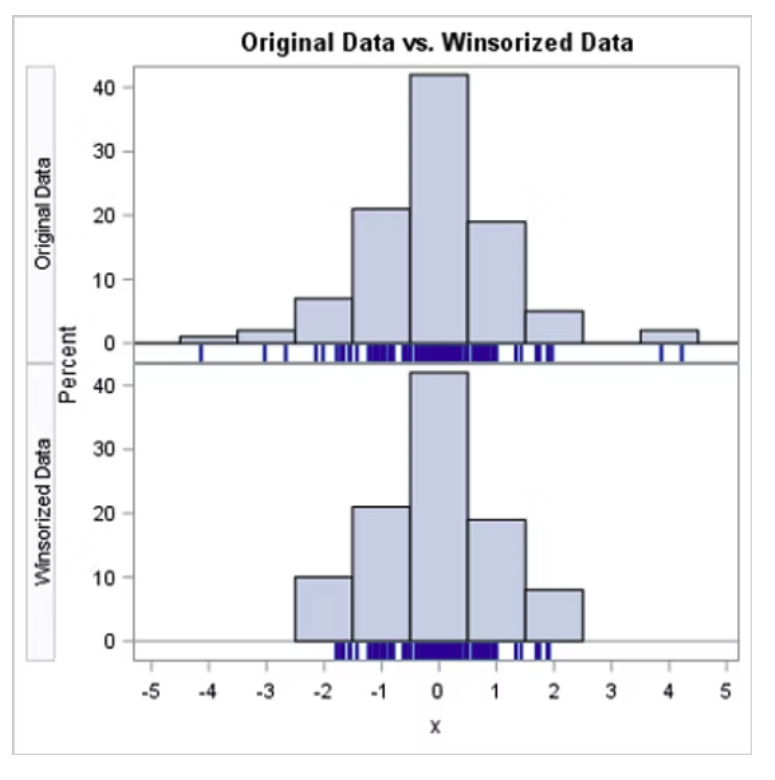
- Winsorized Mean: Caps extreme values instead of removing them
These methods improve robustness, especially in datasets prone to volatility or skewness.
Choosing the Right Mean
The key is not to find the “best” average, but the appropriate one for the context:
- Use Arithmetic Mean for general estimates
- Use Geometric Mean for returns over time
- Use Harmonic Mean for ratios and multiples
- Use Trimmed/Winsorized Means when outliers distort the dataset
Understanding these distinctions is critical. In finance, the way we measure often determines the conclusions we draw.
A more detailed breakdown of these concepts and their applications can be found here:
https://lnkd.in/dS5sk7be

FIrst comment lessgo